
Superba Krill Oil Receives New Regulatory Milestone in Brazil
ANVISA’s public approval opinion recognizing krill oil as a source of choline opens new opportunities for Superba Krill oil and customers developing supplements for the Brazilian market
Choline is an essential nutrient that plays a role in numerous important functions throughout the body, and krill oil offers a natural source of this important nutrient. In Brazil, this nutritional benefit has gained important regulatory recognition, with ANVISA, Brazil’s National Health Surveillance Agency (Agência Nacional de Vigilância Sanitária), issuing a positive opinion recognizing krill oil as a source of choline, with the choline naturally present in krill oil in the form of phosphatidylcholine. The recognition applies to supplements intended for children aged 4–18, adults, pregnant women and lactating women. Aker BioMarine expects the claim to become available for on pack use soon.
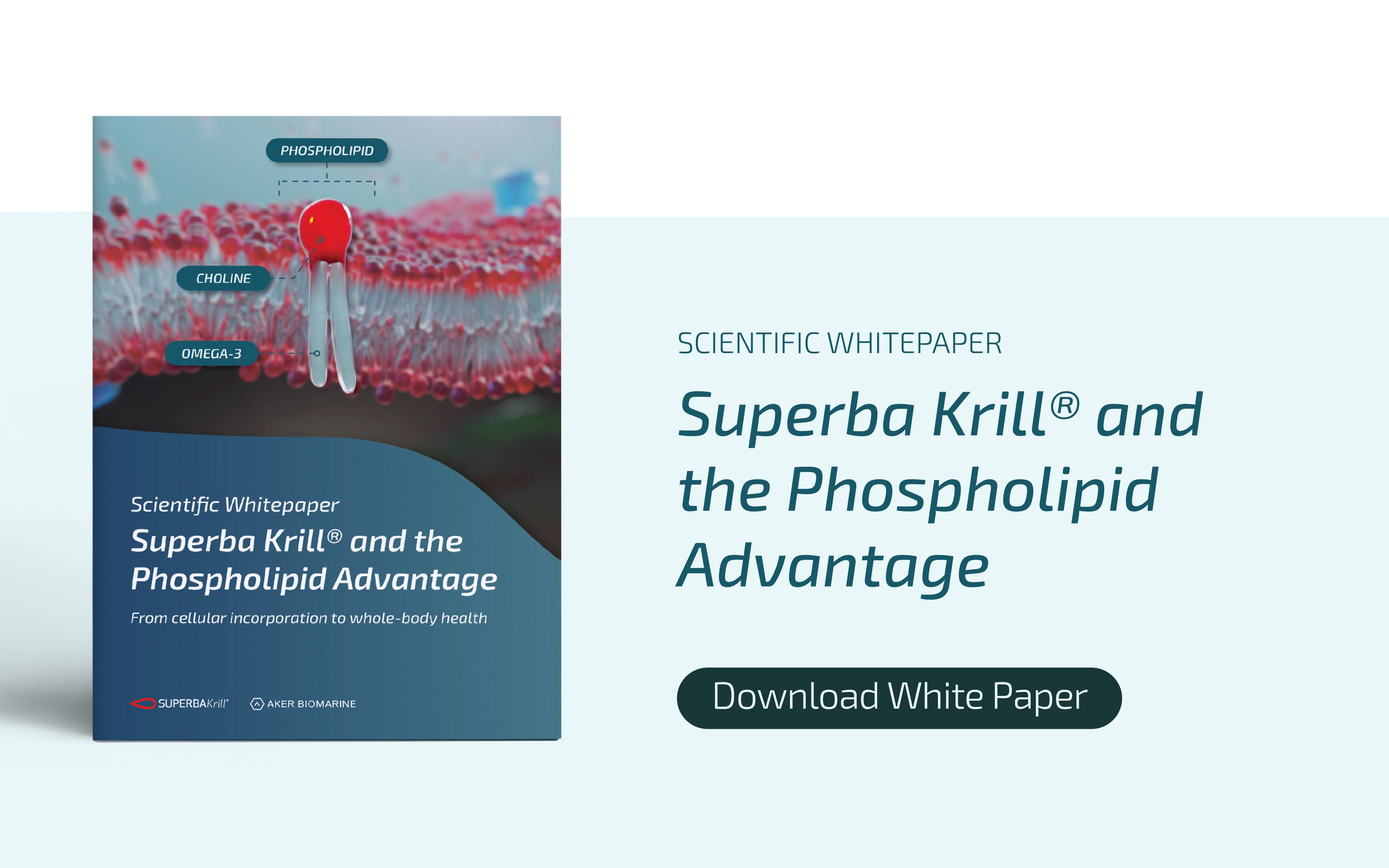
Superba Krill oil naturally contains choline bound to phospholipids, primarily in the form of phosphatidylcholine. This means krill oil provides omega-3 fatty acids and choline together in their natural phospholipid form and offers a convenient, natural way to help support adequate choline intake while delivering the well-established benefits of marine omega-3s. Importantly, this gives krill oil a broader nutritional profile, bringing together EPA, DHA and phospholipid-bound choline in a single naturally occurring ingredient.
For Aker BioMarine, its customers and consumers, this represents an important regulatory development, providing greater clarity around the use of krill oil as a source of choline in Brazil and reinforcing the nutritional value of krill oil beyond its well-established omega-3 content. Regulatory Affairs describes this as a “third nutritional dimension” for krill oil, alongside EPA and DHA—an important evolution in how the ingredient can be viewed and positioned.
From Omega-3 to Multi-Nutrient Nutrition
Krill oil has traditionally been recognized primarily as a source of EPA and DHA. The new regulatory recognition in Brazil adds another nutritional dimension: choline. Together, EPA, DHA and phospholipid-bound choline give krill oil a distinctive multi-nutrient proposition, offering brands an opportunity to explore the ingredient beyond its traditional omega-3 positioning.
For customers developing products with Superba 2 and Superba Boost, this recognition may be particularly relevant, as both naturally contain phosphatidylcholine-bound choline. Subject to applicable regulatory requirements, this creates new opportunities to consider krill oil as part of formulations designed around a broader nutritional proposition.
The Natural Choline Advantage of Krill Oil
Choline is an essential nutrient needed throughout life, with increased requirements during key periods of growth and development, including adolescence, pregnancy, and lactation. It plays an important role in the formation and maintenance of cell membranes and supports processes essential to the brain and nervous system. During pregnancy in particular, choline metabolism and requirements change as both maternal and fetal demands increase.
How we obtain choline also matters. In krill oil, choline occurs naturally in the form of phosphatidylcholine (PC), a phospholipid that has been shown in clinical studies to efficiently raise circulating choline levels, with some studies reporting greater increases compared with certain choline salts, a metabolite associated with potential health concerns when elevated in the context of other dietary and lifestyle factors. Together, these characteristics make krill oil an interesting natural source of choline, delivering it as part of a naturally occurring phospholipid matrix rather than an isolated choline salt.
A New Chapter for Krill Oil Innovation in Brazil
Brazil represents an important opportunity for innovation in the dietary supplement category, and greater regulatory clarity can help manufacturers make more informed decisions around formulation, positioning and product development.
ANVISA’s positive opinion marks an important step forward in recognizing phosphatidylcholine from krill as a source of choline, providing an additional regulatory foundation for customers looking to communicate this nutritional dimension within the Brazilian supplement framework. It also creates an opportunity for our industry to explore krill oil beyond its role as an omega-3 source.
This could be particularly relevant for brands developing products focused on healthy aging, everyday wellness, women’s health, pregnancy, and lactation nutrition. The opportunity lies in having a clearer regulatory pathway to explore these applications, and for an industry increasingly focused on ingredient differentiation, that clarity matters particularly as krill oil naturally delivers choline alongside EPA and DHA, creating a differentiated multi-nutrient proposition.
At the same time, consumers are becoming more educated about ingredients, while brands are looking for ways to create products with a clear and compelling point of difference. Rather than adding a long list of individual ingredients for product formulation, an ingredient that naturally delivers multiple nutritional components can offer a more streamlined and attractive proposition. Krill oil, with its naturally occurring phosphatidylcholine and omega-3s, is well positioned to support this broader approach to formulation.
“ANVISA’s recognition of phosphatidylcholine as a source of choline in Brazil adds an important new dimension to the story of Superba Krill oil,” said Marconne Bandeira, Business Development Director Brazil, Aker BioMarine Human Health Ingredients. “For Aker BioMarine and our customers, this is more than a regulatory milestone, it opens the door to new formulation possibilities and provides an opportunity to rethink how krill oil can contribute to the next generation of nutritional products.”
The Power of a Complete Nutritional Solution
The future of supplementation is increasingly about complete nutritional solutions, and krill oil is well positioned to play a role in that evolution. Krill oil naturally brings together EPA, DHA and phospholipid-bound choline, in a single ingredient, offering manufacturers an opportunity to look beyond individual nutrients toward a more holistic approach to nutrition.
This “third nutritional dimension” strengthens the value proposition of krill oil, giving brands another way to differentiate products while working with a single naturally occurring marine ingredient. For Superba 2 and Superba Boost, both of which naturally contain phosphatidylcholine-bound choline, the development may also help customers connect the regulatory milestone directly to future product development opportunities.
It is important to note that not all krill oils can use the choline claim in Brazil. ANVISA's approval applies only to krill oil produced by the process detailed in EU Regulation 2017/2470 and compliant with the USP and FCC krill oil monographs. Superba and Superba Boost meet both conditions, as demonstrated to ANVISA through certificates of analysis from batches produced by Aker BioMarine.
By bringing EPA, DHA and phospholipid-bound choline nutrition together in one naturally occurring ingredient, Super Krill oil can offer a broader nutritional proposition as consumers increasingly seek products that support multiple aspects of health. The recognition in Brazil provides an important foundation for exploring this expanded role for krill oil and moving the category from an omega-3 story toward a more complete, multi-nutrient nutrition proposition.