Research further supports evidence that Superba Krill oil aids cellular integration and promotes whole-body health
A new clinical study is adding momentum to the growing interest in krill oil as a highly efficient source of omega-3 fatty acids. In a 12-week, double-blind randomized controlled trial conducted by the University of Sherbrooke through Aker BioMarine’s Open Innovation Program, researchers compared Superba Krill oil directly with traditional fish oil to see how effectively each one raises omega-3 levels in the body.
Even when both supplements delivered the same daily dose of omega-3s (1.1 g/day), participants taking krill oil experienced significantly greater increases in circulating EPA and DHA levels than those taking fish oil. On average, omega-3 blood levels rose about 40–50% more in the krill oil group. Equally notable, the study reported excellent tolerability, with no adverse effects and very high adherence rates (96–97%), suggesting both forms were well accepted by participants.
Mélanie Plourde of the University of Sherbrooke noted “These findings are particularly relevant for older adults, as they suggest that krill oil may raise blood omega-3 levels more efficiently than fish oil at an equivalent dose, potentially allowing similar benefits to be achieved with lower intake.”
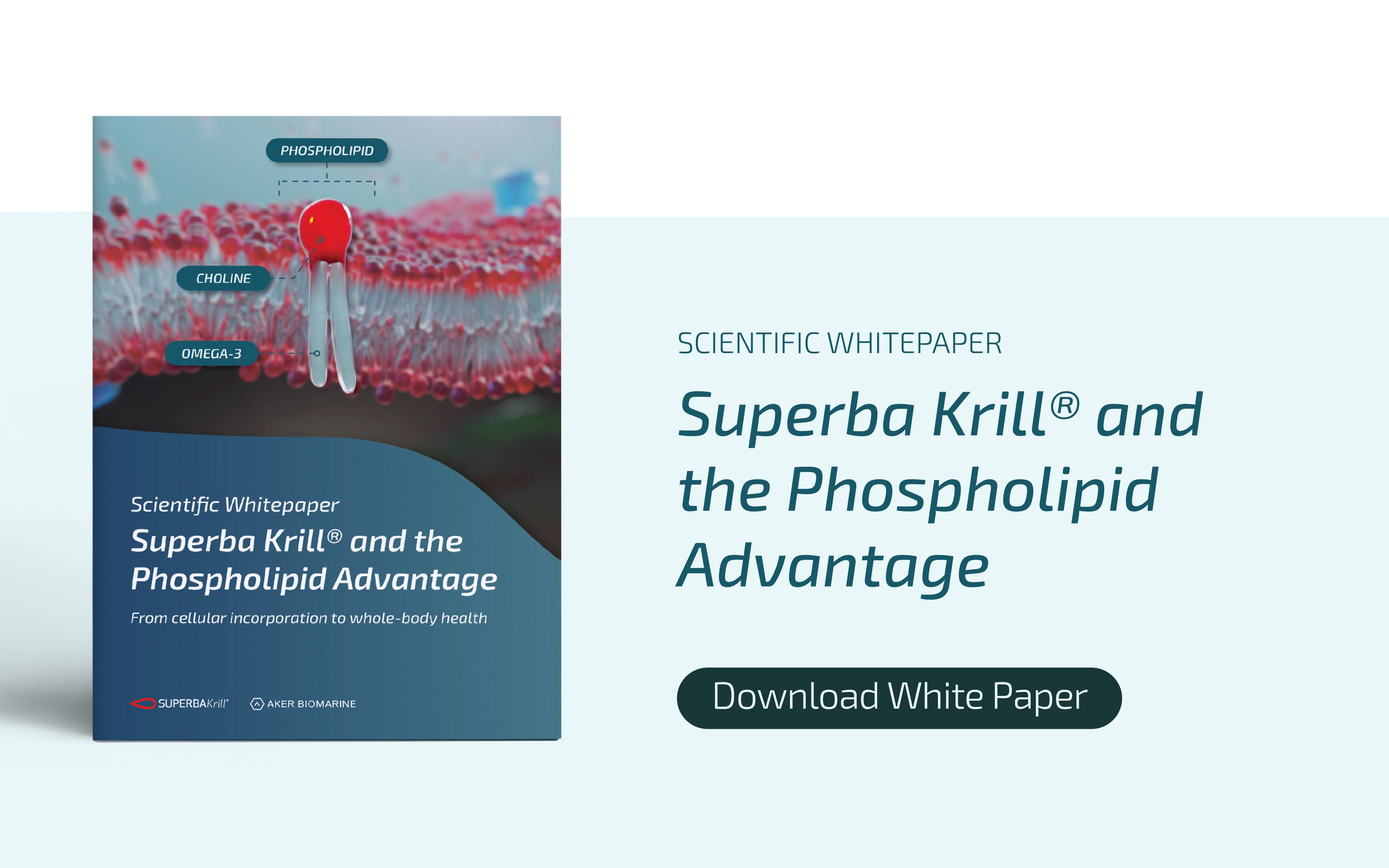
Most omega-3 products on the market rely on triglyceride-based fish oil. Krill oil, however, delivers EPA and DHA in a phospholipid-bound form. That structural difference influences how the body processes and incorporates omega-3s. Phospholipids are the same class of molecules that make up human cell membranes.
Beyond Blood Levels: Why the Omega-3 Index Matters
Many studies measure omega-3 status using blood plasma levels, which reflect short-term circulation. However, a more meaningful indicator of long-term status is the Omega-3 Index, which measures EPA and DHA incorporated into red blood cell membranes.
This metric is widely used in clinical nutrition and is increasingly referenced in cardiovascular research:
- Below 4% is associated with higher cardiovascular risk
- Around 8% or higher is considered optimal
Despite widespread supplementation, most global populations remain below the optimal threshold, suggesting that absorption and tissue incorporation remain key limitations in current omega-3 strategies.
Across a growing body of clinical research, including more than 60 studies on krill oil, have consistently shown strong performance in improving omega-3 status markers.
The Bigger Picture: From Intake to Integration
“Omega-3 benefits are ultimately determined not just by how much is absorbed, but by how effectively these nutrients become integrated into the body's tissues,” said Line Johnsen, SVP of Human Health Ingredients R&D at Aker BioMarine.
That distinction is increasingly shaping how the supplement industry thinks about efficacy. It’s no longer just about how much EPA and DHA consumers take in, it’s about how much actually becomes part of their biology.
The omega-3 category is evolving and for supplement brands looking to innovate, or simply differentiate among the rest, phospholipid-based omega-3s like krill oil are no longer a niche consideration. They’re becoming part of the mainstream clinical discussion on what effective supplementation looks like.